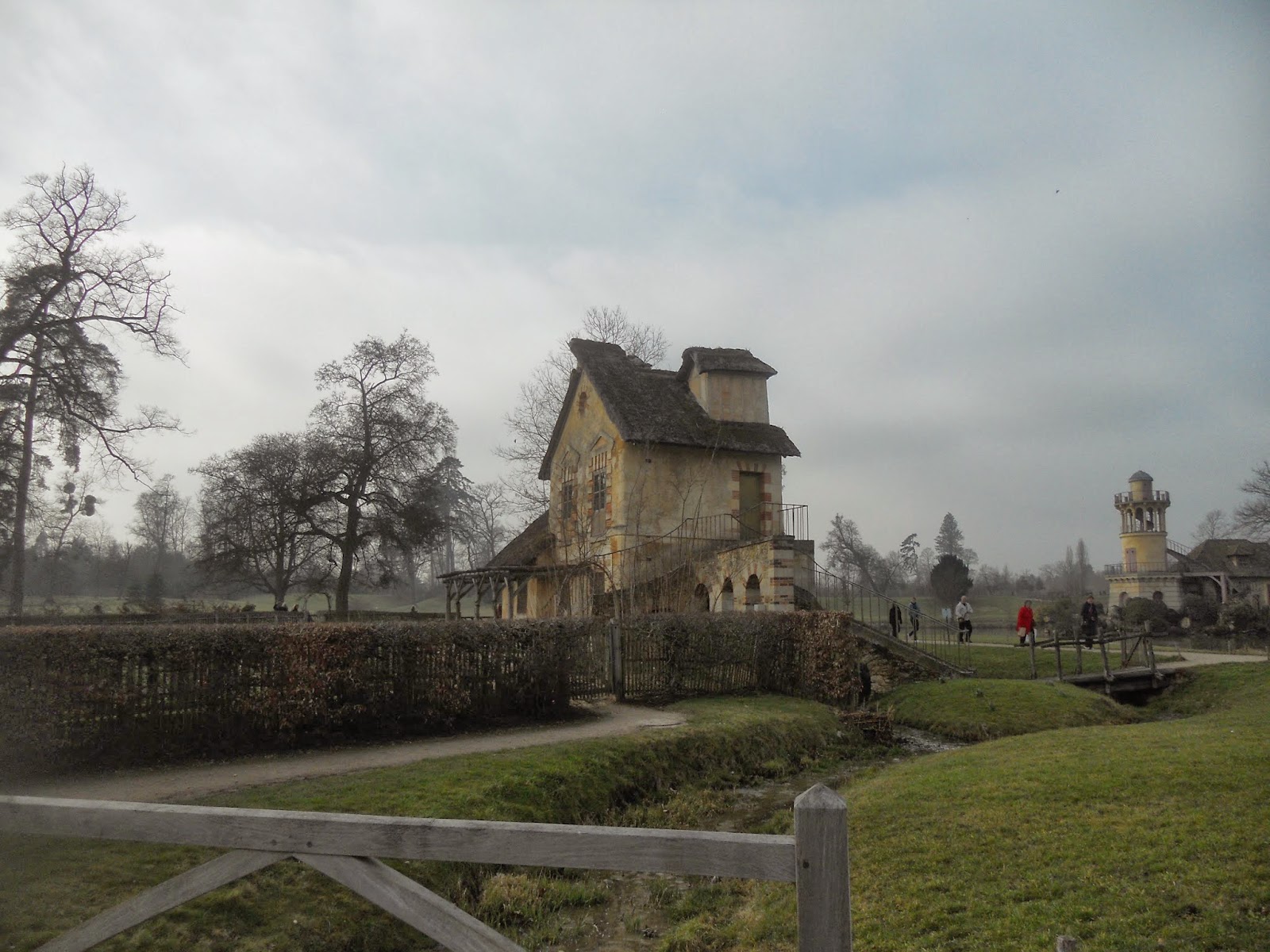
Today is the anniversary of Marie-Antoinette's death. In October, 16th, 1793, she was executed in the current Place de la Concorde. When I was in Paris, I stayed there several minutes trying to imagine how that day happened for one of the last queens of France...
After learning that she was
condemned to death, she was brought back to her cell, in the
Concergierie.
Some people, her lawyers believed
that Marie-Antoinette thought she was going to be spared, maybe
locked up in a convent, or sent in exhile. After all, why kill a
woman who had become so “insignificant”? The revolutionaries
killed the very royal emblem: the king (January, 21st).
However the hatred towards her own person was so strong that she had to be eliminated.


(personal pictures)
The queen walked back to her cell,
calm, dignified, silent.
Was she thinking of all the
superstitious things that had told her, that she would end in a very
tragic way?
She asked for paper
and quill to write her testament, a last and long letter to her
sister-in-law, Madame Elisabeth. The latter represented one of
her strongest moral supports during the last year of her life, mainly
after the king's death. ( Her life turned even worse when her son Louis-Charles was
taken away from her).
No hatred, no feeling of revenge in her
words.
Just a deep chagrin to leave people she
loved, to “forsake” her children still too young to be orphans.
The thought of joining her husband at last, leaving this earth as
innocent as he was.
She was said to have written those last
words:
"on october, 16th, 4:30 am. my God! have pity on me! my eyes have no more tears to cry for you, my poor children; farewell, farewell! Marie Antoinette."

(painting by Vigée-Lebrun. A lost happiness...)
She lay on her bed, exhausted (it
was still very early in the morning). She had cried.
How could her life turn the way it was,
now, in this cold mid-October? No one can really know what actually
ran through her mind.
Did she think about how she should have
acted better as a queen? How unfair people treated her? How uncertain
the lives of her two children had become? How she had fought for
nothing? What history would keep and remember from her?
The young and happy Autrian princess,
showered with love and wealth and all the gifts life could have
given, had become a sad, unfortunate woman hated by everyone.
Despite all the negative things that
she may have pondered over, she gathered her courage: she was to die a dignified and noble death. Marie-Antoinette was
Maria-Theresa's daughter after all; she could not act as a coward,
and she was none of that.
Rosalie Lamolière, her last
servant, brought her food. The young girl was crying as she
urged the queen to take something. She herself found the queen
shedding tears when she entered the cell. Men penetrated her room,
acknowledging her no intimacy. She was denied until her status as a
woman, as a human being.
After that the queen changed her
clothes, pulling on a white dress (the mourning colour for French
queens), she tried to hide her former ones that blood has stained.
Indeed, Marie-Antoinette had undergone a serious illness and today
many people think she might have had uterine cancer. Therefore, had
she not been executed, she wouldn't have lived long.
They cut her hair short and tied her
wrists together behind her back, refusing to give the somewhat human
treatment that Louis XVI enjoyed during his last day. How
humiliating it must have been for Marie-Antoinette to be treated as
an object. She didn't want the services of a sworn priest since he
had pledged allegiance to the Convention and the revolution.

Then, she was conducted to the
carriage that would lead her to the guillotine.
From the conciergerie to the Place
Louis-XV, there are only around 2 kilometres. However, her last journey
lasted quite long. The crowd flowed to the queen's path, shouting her
obscenities, insults. What a stark contrast with how people had welcomed her in France! With flowers and love! Now people were smiling at
her with cruelty and satisfaction. La reine va mourrir, vive la
révolution!

(David's famous sketch)
However, some of her last admirers
flocked to her ride, crying, watching the injustice with which she
was enduring her last hour. They had to hide their sadness and
despair: people shouldn't believe that they supported royalty!
The queen could see the palace of the
Tuileries.
Marie-Antoinette arrived at the feet
of the scaffold, pale and absolutely composed. She was going to prove
how much courage still inhabited her. Death had no
hold on her. She looked at the long machine, her last encounter.
Fine. Despite blood leaving her cheeks, the queen climbed the stairs
and stepped on the platform, and the executioner's foot. She apologized.
Men tied her around the wood board.
She didn't cry, didn't resist, didn't lose consciousness. She
remained firm and strong. What were these men thinking when they
approached and sealed her to the destinity? What were their thoughts
when the famous woman they were about to kill was the Queen of
France, the woman who fed so many phantasms?

They slid the wood board horizontally
back, secured the wooden “necklace” around her as the crowd
cheered on this last act. The blade fell and everything was over.
Sanson grabbed the head, planted it on
a bayonet and pranced it around to show it to the crowd. People had
been silent and dismayed when Louis XVI died. But for his wife, they had reserved
long applauses and cries of joy; "the whore was dead!"
At last, they placed her body in a
wicker coffin, her head between her legs, blood trailing. Everything
was brought to the Madeleine cemetry and her body stayed there, during several days until they finally buried her, not far away from her
husband.
Nowadays, thanks to Louis XVIII, a
chaptel “Chapelle expiatoire”stands where the cemetry used to be.

(picture source: wikipedia)
I apologize if there is any mistake (factual, grammar, vocabulary etc.).
I apologize if there is any mistake (factual, grammar, vocabulary etc.).